
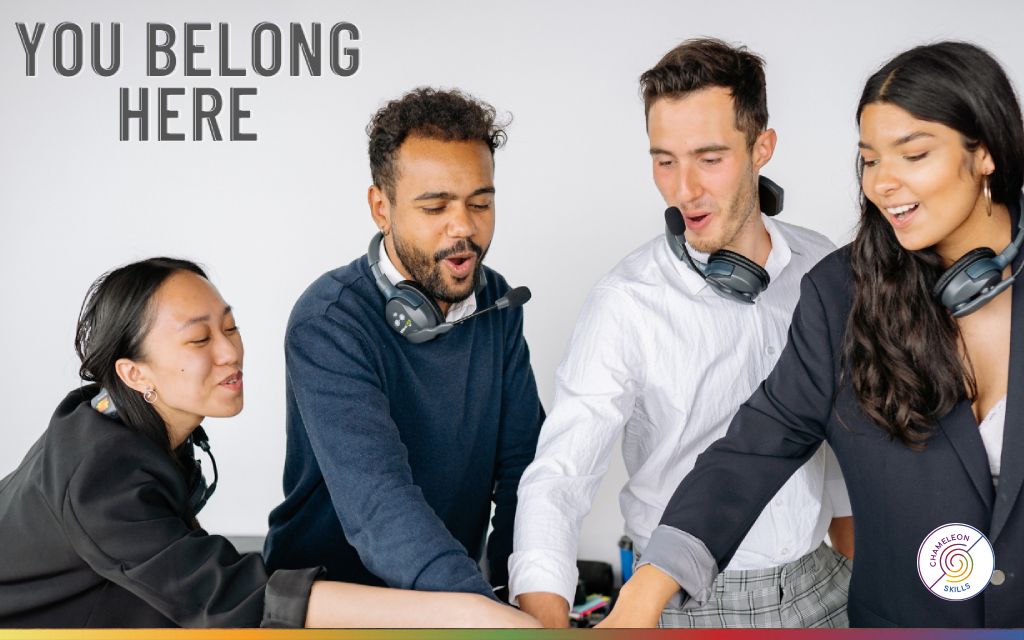
Do you get by with a little help from your friends?
Most of us smile when we hear those words.
Perhaps because, deep down, we know they are true.
This month we celebrate Friendship Day. It is a reminder that relationships matter far more than we often realise – not just in our personal lives, but in the places where we spend much of our time: at work.
“Each friend represents a world in us, a world possibly not born until they arrive.”
– Anaïs Nin
Psychologists have long recognised belonging as one of our basic human needs. We all want to feel accepted, valued and part of something bigger than ourselves.
Yet many organisations invest enormous amounts of time in strategy, technology and processes, while paying far less attention to the quality of the relationships that hold everything together.
Gallup has asked millions of employees one deceptively simple question:
Do you have a best friend at work?[1]
At first glance it seems an unusual business question.
Yet the research consistently shows that people who have strong workplace relationships are more engaged, collaborate more effectively and are more likely to stay with their organisation.
It is not because friendship drives performance.
It is because friendship is often evidence of something deeper – people feel that they belong.
Relationships never exist in isolation.
Every interaction influences the wider ecosystem.
One welcoming conversation can increase confidence.
Confidence encourages contribution.
Contribution builds trust.
Trust strengthens the whole workplace ecosystem.
When people feel they belong, they are more likely to speak up, ask for help, share ideas and admit mistakes. Belonging creates the psychological safety that allows individuals and teams to learn, innovate and perform at their best.
Every year we work with graduates entering organisations for the first time.
This challenge appears again and again.
They want to connect.
They want to ask questions.
They want to belong.
Yet many are hesitant to interrupt busy colleagues or invite themselves into established groups.
Something as simple as inviting a new colleague to join you for coffee or lunch can make the difference between someone feeling like an outsider and someone beginning to feel part of the team.
This is where intergenerational workplaces have such an opportunity.
Belonging grows when curiosity replaces assumptions.
When experienced colleagues take time to share their knowledge.
When younger colleagues feel safe enough to ask questions.
When every generation recognises it has something valuable to contribute.
Intergenerational relationships are not about one generation helping another. They are built on mutual learning, shared experience and genuine curiosity. Everyone has something to teach, and everyone has something to learn.
Hybrid working has given us flexibility.
But it has also removed many of the small moments where relationships naturally develop.
The conversations before meetings begin.
Walking back from lunch together.
Asking someone how their weekend went.
These moments may appear insignificant, yet they quietly build trust over time.
When those everyday moments disappear, people can begin to feel disconnected without anyone noticing.
When we work remotely, we need to create these moments intentionally rather than hoping they happen.
Here are some simple ways to build belonging every day
- Notice who is sitting alone
- Invite someone for coffee
- Begin meetings with genuine check-ins, not just task updates
- Keep cameras on when appropriate so people can read one another’s reactions
- Ask, “How are you managing?” not just, “How’s the project?”
- Remember that small acts of inclusion often have a ripple effect across the whole team
Belonging is not just good for people. It is good for organisations. Teams that feel connected communicate more openly, collaborate more effectively and are better able to navigate change together.
We often ask whether people fit into our organisations.
Perhaps the better question is whether our organisations help people feel they belong.
Belonging does not happen by accident.
It grows through everyday conversations, small acts of inclusion, genuine curiosity and relationships built over time.
Every interaction strengthens or weakens the ecosystem around us.
This month, don’t just ask yourself, “Do I belong?”
Ask instead,
“Who could I help feel they belong?”
That small shift has the potential to change not only one person’s experience of work, but the culture of an entire team.
Sometimes the biggest shifts begin with a different conversation.
If you’re wondering how to strengthen belonging, trust and connection in your team or organisation, we’d love to explore those questions with you.
[1] https://www.gallup.com/workplace/397058/increasing-importance-best-friend-work.aspx
If you are unsure where to start, talk to us. We would love to explore how we can support your team’s growth journey.
