
“Trust me.”
Those two words can evoke very different responses.
When they come from a doctor, we may be willing to rely on their expertise. When they come from a salesperson, warning signals may immediately start flashing in our minds.
We are naturally alert to risk. It is part of how humans have survived. Being cautious and sceptical can protect us – particularly in a world of scams, misinformation and promises that sound too good to be true.
Trust is not something we give automatically. It develops through what we experience.
Yet trust appears on the values statements of organisations everywhere, as though placing the word on a wall will make it real.
It won’t.
The more we work with leaders and teams, the more we see that trust is fundamental to effective working relationships. Yet it is rarely given deliberate attention. People are encouraged to collaborate, challenge one another, share ideas and take accountability without first considering whether there is enough trust for them to do so.
Trust takes time to build – and surprisingly little time to damage.
What makes a team valuable?
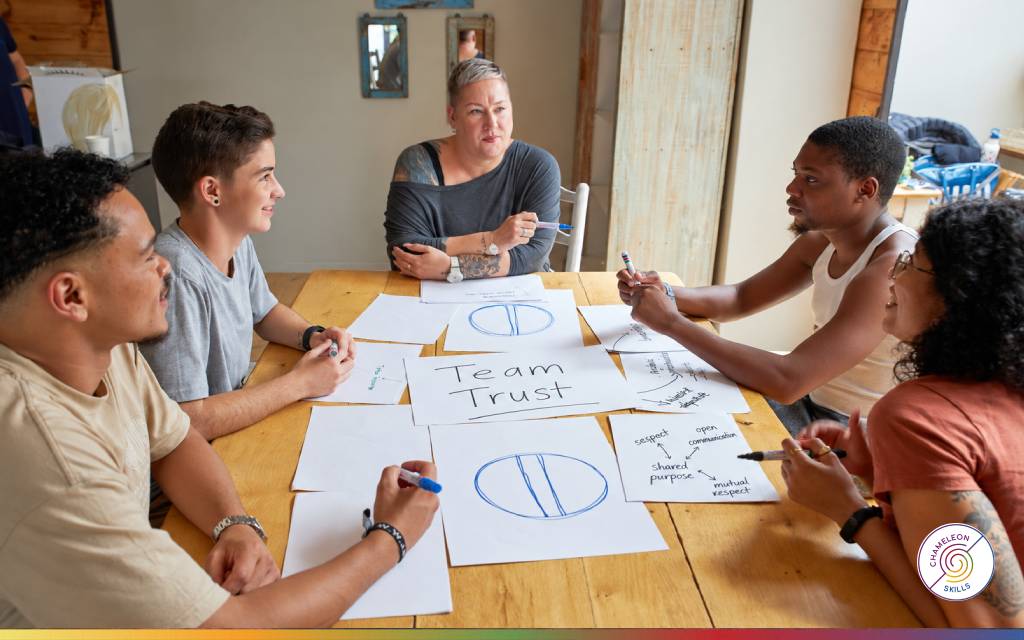
We have placed trust among four elements that we believe contribute to a successful team:
- Belonging
- Alignment
- Trust
- Accountability
I deliberately use the word successful rather than high-performing. High performance is not necessarily the purpose of every team, nor should it be the only measure of its value.
A better question might be: Is this team fit for purpose?
Is it contributing value to the wider organisation and the people it serves or has maintaining the team itself become its primary focus?
The four elements help us look beyond performance figures and consider the relationships and conditions that make sustained contribution possible.
Trust begins with belonging
It is difficult to trust people who make you feel that you do not belong.
When you feel like an outsider, you cannot be certain that others will protect your interests, listen to your perspective or care about what you need. You naturally become more cautious about what you say, which ideas you offer and how much of yourself you reveal.
Belonging gives us a place within the group.
Once we feel that we belong, we are better able to explore whether we are aligned with its direction and purpose. Do we understand what we are working towards? Do we see how our contribution matters? Are we prepared to put collective priorities ahead of our individual preferences when necessary?
Alignment gives us a shared direction.
Trust then allows us to work honestly within that direction. It makes it possible to question, disagree, admit uncertainty, ask for help and raise concerns before they become larger problems.
That is what makes meaningful accountability possible. When trust is present, accountability is not something imposed by a manager. It becomes a commitment people make to one another.
Would others experience you as trustworthy?
Think about a time when you trusted your manager or your colleagues.
What created that feeling?
It may never have been put into words. You probably noticed it through their behaviour. They did what they said they would do. They were honest with you. They treated you fairly. They supported you when something went wrong.
Trust is built through these small, repeated experiences.
The opposite is also true. We have all experienced the disappointment of being let down: the frequently cancelled arrangement, the missed deadline, the promise followed by an excuse or the confidence that was not kept.
When we work with clients, they are sometimes unaware of how their everyday behaviour affects the trust others place in them.
If you regularly arrive late for meetings, people may learn that they cannot trust you to respect their time.
If you make promises and repeatedly explain why someone else prevented you from keeping them, people may learn that they cannot rely on your word.
If you forget requests or fail to manage your commitments, people may learn that they need to follow up – or do the work themselves.
These actions may appear small or easily explained to the person doing them, but their cumulative effect on others can be significant.
Before asking whether we can trust other people, perhaps we should ask: What is it like for others to place their trust in me?
The simplest answer is to be trustworthy
There are many theories about how to generate trust, but the simplest answer is to behave in ways that demonstrate you are worthy of it.
Keep your promises. If circumstances change and you cannot do what you committed to, communicate early and take responsibility.
Tell the truth, including when the truth is uncomfortable.
Avoid gossip and personal criticism. If people hear you speaking carelessly about others, they will reasonably wonder what you say about them when they are not present.
Share recognition for success with everyone who contributed. When leaders repeatedly claim the glory, people eventually stop sharing their ideas.
Admit when you do not know, when you have made a mistake or when you need help.
Trust is not built through one grand gesture. It is built through the consistency between what we say and what we do.
Psychological safety is not a permanent team achievement
Managers increasingly recognise the importance of psychological safety – the ability of people to contribute, question and acknowledge mistakes without fear of humiliation or punishment.
But psychological safety cannot be declared or guaranteed. Nor is it something a team achieves once and can then take for granted.
Each person may experience a different level of safety within the same team. Personality, previous experiences, power dynamics and relationships all influence whether someone feels able to speak.
That experience can also change from day to day.
Someone may feel confident and ready to contribute one day. On another, a difficult situation at home or work may leave them less able to speak openly or take an interpersonal risk. The psychological safety of a team is therefore not measured by its most confident or vocal members. We need to pay attention to the person who feels least able to contribute on that particular day.
Whose voice has not been heard?
Who has become quieter?
Who may be agreeing because disagreement does not feel safe?
Trust requires ongoing attention.
Trust reaches beyond the team
Trust is personal, but its impact is ecosystemic.
One person’s unreliability creates additional work for someone else. A manager who takes credit discourages future ideas. A team that cannot discuss mistakes passes unresolved risks into other departments. An organisation that speaks about trust but tolerates blame, gossip or broken promises teaches people to protect themselves.
The effects spread through relationships, teams and systems.
The reverse is also true.
When people can acknowledge that they are struggling or unable to give their full capacity, the team can respond with the right support. Providing that support may be the quickest way to help someone recover their contribution – and it can create a depth of commitment that no motivational slogan could buy.
Trust does not mean lowering expectations or avoiding difficult conversations. It makes those conversations possible.
A moment for reflection
Who among your family, friends and colleagues would you trust to stand alongside you when things became difficult?
Who do you trust enough to share your dreams, doubts and challenges with, without embarrassment or shame?
And perhaps the harder question:
Are you someone people would trust with theirs?
Trust is built in the everyday moments of working together. What is one action you could take this week to make it easier for others to trust you?
And if trust has become difficult in your team – if conversations are being avoided, accountability is slipping, or people are beginning to protect themselves rather than work together – it may be time to pay attention to what is happening beneath the surface.
At Chameleon Skills Coaching, we work with leaders and teams to make those patterns visible, have the conversations that matter, and find practical ways forward.
If this is a conversation your team needs to have, get in touch. We can explore what is happening beneath the surface and what might become possible together.
