
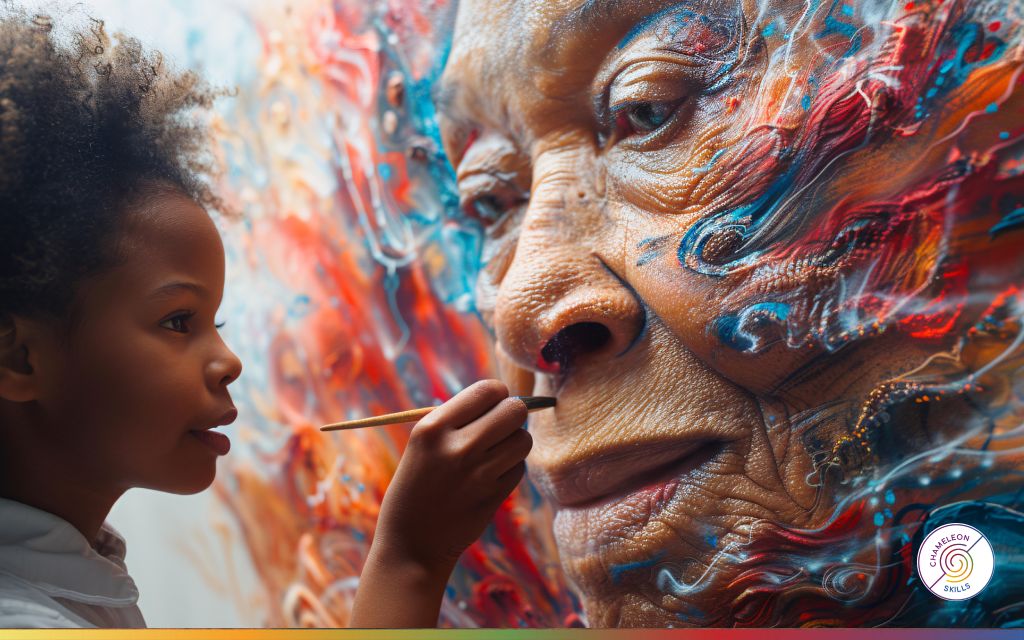
Every June, South Africa pauses to recognise the role young people have played – and continue to play – in shaping the country’s future. And many young people are preparing to enter a workplace that looks very different from the one previous generations stepped into.
At the same time, organisations are asking a different question:
Do we really know what skills the future workplace requires?
The world of work has changed dramatically over the last few years and, with AI rapidly becoming part of everyday business life, that pace of change is only accelerating.
Yet many recruitment systems still focus heavily on qualifications and technical capability. Those may open the door, but they are no longer enough on their own.
When hundreds of young people apply for the same role, qualifications become the baseline. What increasingly matters is adaptability, curiosity, emotional intelligence, collaboration and the confidence to engage with change.
Younger employees often bring something many organisations desperately need right now – comfort with technology, willingness to experiment and fewer assumptions about “how things have always been done.”
Older generations often approached technology cautiously, worried about breaking it. Younger generations grew up alongside constant digital change. They tend to explore first and learn by doing.
That confidence and playfulness can become an enormous organisational asset – if the ecosystem allows it.
Too often, it does not.
Many corporate systems were built in an era of command-and-control leadership, risk reduction and rigid hierarchy. Innovation is encouraged in theory, but conformity is rewarded in practice.
As a result, organisations sometimes hire young talent for fresh thinking and then immediately train them to fit into old patterns.
The risk is not youth.
The risk is creating systems that silence initiative, discourage experimentation and reward sameness.
And this affects the whole organisational ecosystem.
When younger voices are ignored:
- innovation slows
- adaptability weakens
- engagement drops
- future leaders disconnect
- intergenerational frustration grows
We often see several factors holding managers back from fully embracing younger talent:
- Fear of mistakes and short-term financial impact
- Wanting to protect younger employees from anxiety or failure
- Outdated systems and processes
- Leadership cultures built on excessive control
- Fear of becoming irrelevant or “too old”
But future-focused leadership requires something different.
It requires leaders who can create environments where learning, experimentation and contribution are welcomed.
That may mean asking different questions:
- What if we approached this differently?
- Is there a simpler way?
- What are we not seeing?
- Where else could this idea work?
- What can we learn from the way younger employees engage with technology?
It also means bringing younger employees into conversations about AI, innovation and the future of work – not after decisions have already been made, but while thinking is still developing.
Their “beginner’s eyes” often spot possibilities and risks that others overlook.
At the same time, technical confidence alone is not enough.
Young people also need support in developing emotional intelligence, communication skills, judgment and leadership capability. The future workplace will not belong to technology alone. It will belong to people who can combine human insight with technological capability.
This is where intergenerational workplaces become powerful.
Cross-mentoring allows younger employees to share digital confidence and fresh thinking, while experienced colleagues share business wisdom, perspective and stewardship.
When generations learn with each other rather than compete against each other, the entire ecosystem becomes stronger.
Perhaps that is the real opportunity of Youth Month.
Not simply to celebrate young people, but to ask whether our organisations are truly designed to benefit from what they bring.
Because the organisations that thrive in the future may not be the ones with the best technology.
They may be the ones that know how to listen to their youngest voices.
“Every generation enters the workplace carrying the future in a different form.”
(Chameleon Skills)
At Chameleon Skills we work with leaders, teams and organisations to strengthen intergenerational collaboration, leadership capability and ecosystemic thinking so that every part of the workplace can contribute, grow and adapt together.
Why not let us help you?
